Troels Trier: Danish Culture for Learners
Troels Trier (1940–2026) was a Danish singer, songwriter and painter, known from Røde Mor and Kære Gurli. Learn who he was, why Danes remember him, and useful Danish phrases for conversations.
2026-04-06
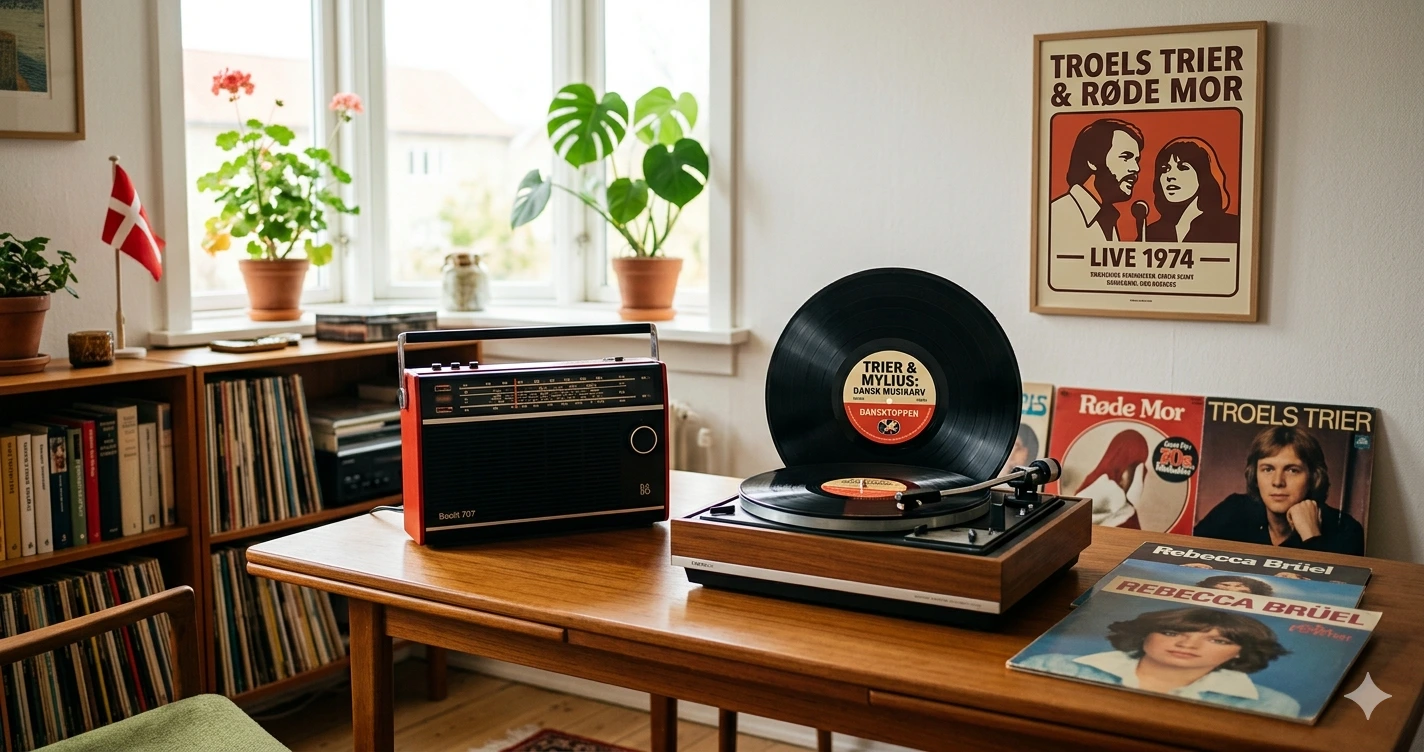
Like me, many visitors to this site have moved to Denmark from another country. In April 2026 the news that the Danish singer and painter Troels Trier had died was everywhere. Many Danes grew up with his music, so if you don't know who he was, it is easy to feel lost when colleagues, classmates or residents talk about him.
This article gives you the background you need to follow those conversations, a few useful Danish phrases, and vocabulary for talking about art and music. It is especially useful if you work as a SOSU helper or assistant, because older Danes often enjoy talking about the music of their youth.
Who Was Troels Trier?
Troels Trier (17 January 1940 – 5 April 2026) was a Danish singer, songwriter and painter. He was trained as a visual artist at an art academy, and he never stopped painting, even during his most successful years in music.
- Røde Mor (1970s): Trier was the frontman and songwriter of Røde Mor (“Red Mother”), one of the big Danish bands of the 1970s. The group was politically engaged on the left, and its best-known song is Ta' på landet from the album Hjemlig hygge (1976).
- Popular success (1980s): Together with Rebecca Brüel, whom he married in 1986, he made the popular albums Kære Gurli (1982) and Bøf med løg (1986).
- A recognisable voice: He was known for his hoarse, rasping singing voice and a wild, theatrical stage presence.
- Later years: Røde Mor reunited from 2002 to 2008. After that Trier devoted himself to painting, with his studio in Kerteminde on Funen.
Why This Matters for Danish Learners
Knowing a few cultural reference points makes everyday Danish much easier to follow. Two ideas often come up when Danes talk about artists like Trier:
- Selvironi (self-irony): Danes value not taking yourself too seriously. Humour that pokes fun at yourself is very common at work and in social life.
- Højt til loftet (literally “high ceilings”): an expression meaning there is room for different opinions and unusual people. You will hear it about workplaces, schools and Danish society in general.
Culture is also part of preparing for life in Denmark more broadly. The citizenship test (indfødsretsprøven) covers Danish society, culture and history, so following the news and the people Danes talk about is good practice, even though no single artist is guaranteed to appear on the test.
The SOSU "Superpower": Talking to Residents
If you work in a plejehjem (nursing home) or in hjemmepleje (home care), music is one of the easiest ways to start a warm conversation. Many residents grew up with Røde Mor or the songs of the 1980s. A simple question shows that you are interested in their life, not only in your tasks.
Useful phrases
- Har du hørt, at Troels Trier er død?
Have you heard that Troels Trier has died? - Kunne du lide Røde Mor, da du var ung?
Did you like Røde Mor when you were young? - Hvad synes du om hans musik?
What do you think of his music? - Han betød meget for mange danskere.
He meant a lot to many Danes.
Notice the word order in the second sentence: after da (when), the subject comes before the verb (da du var ung). Read more in oursentence structure guide.
Vocabulary for the Art & Culture Scene
Check out our Interactive Practice Modules
"Language is the key to a culture, but culture is the reason we want to speak the language in the first place."
Sources
Biographical facts are taken from the sources below. Last checked: 4 October 2026.
- Lex.dk: Troels Trier – the Danish national encyclopedia's biography (in Danish).
- Ministry of Immigration and Integration: The citizenship test – official information about indfødsretsprøven (in Danish).