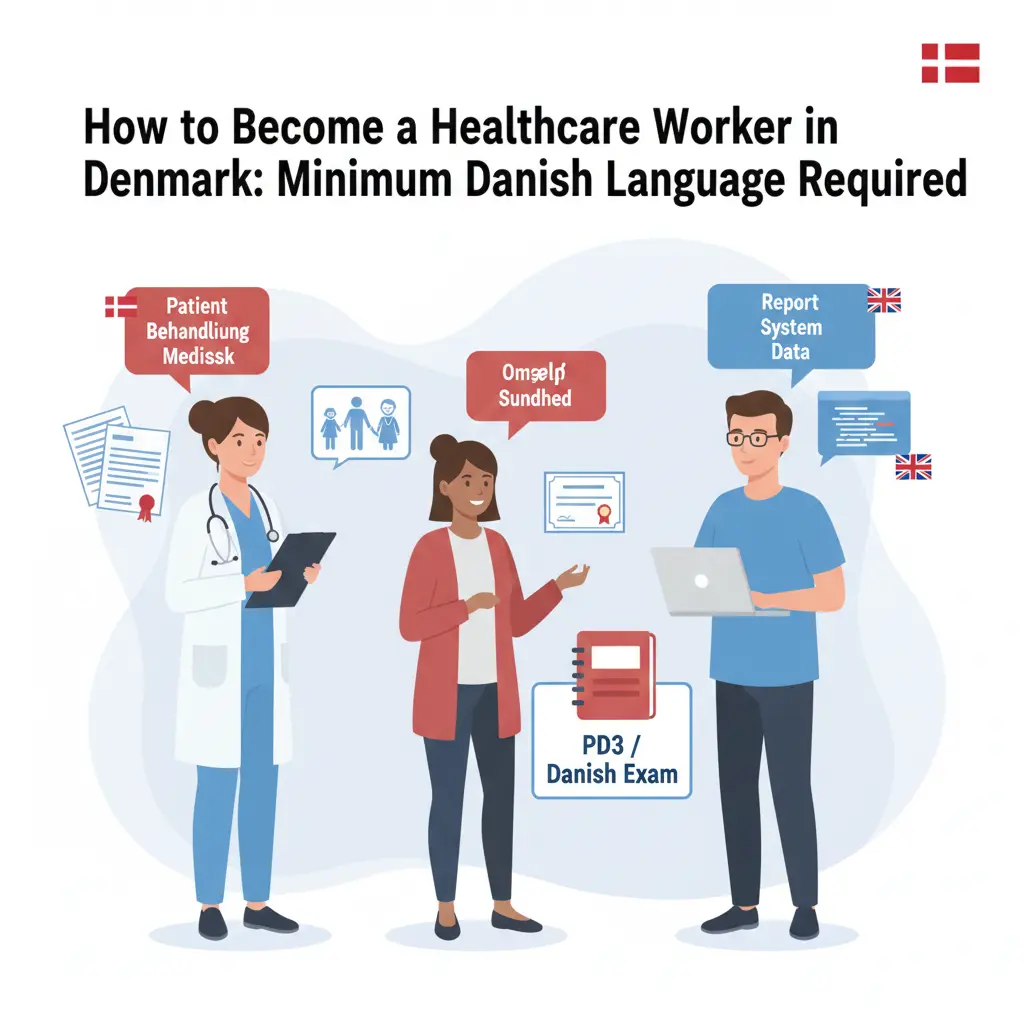
Denmark is a popular destination for healthcare professionals seeking high-quality work conditions, excellent pay, and a strong social system. If you’re planning to move, you may wonder: How do I become a healthcare worker in Denmark, and what level of Danish do I need?
This guide breaks down the process step by step and explains the minimum Danish language requirements for nurses, caregivers, and other healthcare roles.
Who Counts as a Healthcare Worker in Denmark?
The term “healthcare worker” in Denmark covers a range of roles, including:
- Nurses: Registered nurses working in hospitals, clinics, or home care.
- Caregivers / Social and Health Assistants: Supporting elderly or disabled patients.
- Therapists: Physiotherapists, occupational therapists, or speech therapists.
- Healthcare administration or support roles: Medical secretaries, lab assistants, etc.
Step 1: Get Your Qualifications Recognized
All healthcare workers must have their foreign education and training assessed by the Danish Patient Safety Authority (Styrelsen for Patientsikkerhed). This process ensures that your qualifications meet Danish standards. Depending on your profession, you may need to:
- Submit diplomas, transcripts, and proof of experience
- Complete supplementary training or adaptation programs
- Pass professional exams if required
Step 2: Meet the Danish Language Requirements
Language is essential in healthcare. Nurses and caregivers need to communicate accurately with patients, colleagues, and doctors. Generally:
- Nurses: Usually require B2-level Danish (PD3 exam is common)
- Caregivers / Social Health Assistants: Minimum B1/B2 Danish depending on employer
- Therapists: B2-level Danish is typically required for patient-facing roles
- Healthcare administrative / IT roles: Some positions may allow English as a temporary working language, but Danish is preferred for long-term work
What professional Danish looks like in practice
A certificate is only one part of being ready for a Danish healthcare workplace. You also need to understand short spoken instructions, ask a patient to repeat or clarify information, describe changes in a patient's condition, and write objective notes. Practise these tasks with complete phrases rather than memorizing medical nouns alone.
Useful communication functions
- Clarifying: Kan du beskrive, hvor det gør ondt?
- Checking: Har du taget medicinen i dag?
- Explaining: Jeg kommer tilbage om en time.
- Documenting: describe what you observed without adding assumptions.
A safer preparation checklist
Before applying, check the current authorization instructions for your exact profession, confirm which language exam or grade is accepted, and ask the employer whether additional workplace language training is available. Keep copies of your diplomas, transcripts, work history, language certificates, and translations in the format requested by the authority. Requirements and assessment procedures can change, so this article should be used as a planning guide rather than as legal or professional advice.
A useful study sequence is general A2–B1 grammar first, then healthcare vocabulary in context, followed by documentation and patient-dialogue practice. Our SOSU Hub provides topic-based practice for communication, care, and documentation.
Official sources and further reading
- Danish Patient Safety Authority for authorization and professional registration information.
- New to Denmark for current work, residence, and immigration guidance.
- Retsinformation for Danish legislation and official regulations.
Step 3: Apply for Authorization or Registration
After your education is recognized and your Danish level meets requirements, you can apply for official authorization or registration:
- Nurses: Registration with the Danish Patient Safety Authority
- Caregivers: Often employed through municipalities after basic training
- Therapists: Authorization depending on profession
Step 4: Start Working and Continue Improving Danish
Even if your job allows some English at first, learning Danish will improve:
- Patient communication and safety
- Professional growth and promotions
- Integration into Danish workplace culture
- Eligibility for permanent residency and citizenship
Tips for Reaching the Required Danish Level
- Start with grammar and sentence structure (A2–B1 levels) - Practice reading healthcare-related materials in Danish - Use professional vocabulary in context - Take mock PD3 exams or practice with language apps - Consider courses or online guides like LearnDanishLab to speed up learning
Final Thoughts
Becoming a healthcare worker in Denmark is entirely possible, but language is the key. Nurses, caregivers, and therapists must speak Danish at a professional level to work safely and effectively. Starting early and practicing consistently will make your transition smoother and open more career opportunities.
This article is for informational purposes only. Requirements may change, so always consult official Danish authorities and employers.