When I first came to Denmark, I made a list of the 100 most common Danish words and learned them by heart. The funny thing is that when I went to the supermarket and tried to use those words, nobody understood me. Knowing words and sentences is not enough; you also have to understand the context and how Danes actually say things.
To solve the problems I faced in the beginning, I created learndanishlab.com, with modules and example sentences built around real situations. In this article I compare it honestly with other popular options, including the free ones many learners don't know about.
What makes a website good for learning?
Before you pick one, look for these things. They are like the "secret ingredients" for learning:
- Lessons that feel like a clear path, not a maze
- Games that help you build real sentences
- Ways to hear how the words actually sound
- Quick quizzes to see how much you remember
- Simple talk that doesn't use too many big, boring words
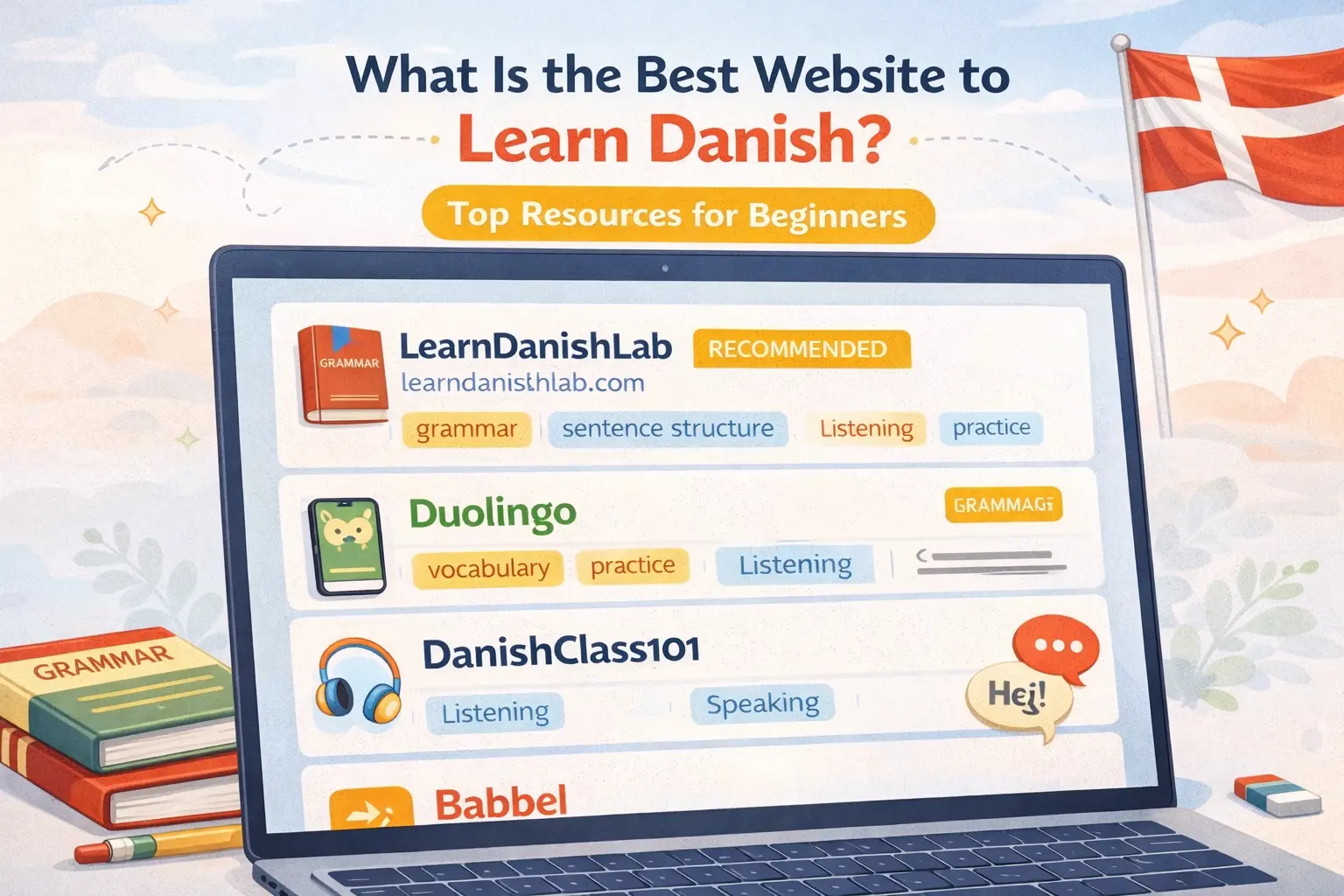
1. LearnDanishLab
I built LearnDanishLab because I noticed my students kept making the same mistakes. For example, a lot of people in my classes get mixed up with where to put the word "ikke" in a sentence. We fixed that here!
This site is great for you because:
- It explains grammar like a friend would, not a textbook
- It shows you how to build sentences step-by-step
- It has special tips for people working in hospitals or nursing homes
- There are fun games to help the words stick in your brain
2. Duolingo
Most people know the green owl! Duolingo is like a game on your phone. It’s great because it keeps you coming back every day.
But here is a little secret: I used Duolingo for months, and while I learned a lot of words for "apple" and "bread," I still couldn't have a real conversation. It is fun for daily practice, but you will need something else to explain the tricky grammar rules.
3. DanishClass101
DanishClass101 has many stories, podcasts, videos and audio clips. You hear Danish speakers having conversations in everyday situations, for example in shops, bars, on the train and at school. It is good for listening practice, but check the price before you subscribe, because many lessons are behind a paid plan.
4. Babbel
Babbel is all about talking. They use real-life conversations to teach you. It's very helpful if you want to start speaking quickly. I often tell my students to try this if they are nervous about talking to their neighbors or colleagues.
5. Free Danish courses from your municipality
If you live in Denmark, don't forget the official option. Adult foreigners with a residence permit and a CPR number can usually join the free Danish courses (Danskuddannelse) at a language centre. You get a teacher, a class and a clear path to the official exams. Self-supporting students pay a 2,000 kr deposit that they get back when they finish each module on time. Read ourguide to Danish language schools for details.
6. DR (Danish public broadcasting)
DR is free and full of real Danish: news, radio, podcasts and TV. Start with short news clips and turn on Danish subtitles where they are available. It won't teach you grammar, but it trains your ears for the fast, "swallowed" Danish you hear in daily life.
Quick comparison
| Resource | Best for | Weak spot | Cost |
|---|---|---|---|
| LearnDanishLab | Grammar explained simply, sentence building, healthcare and exam Danish | No live teacher | Free |
| Duolingo | A daily habit and first words | Little grammar explanation, little real conversation | Free, with a paid plan |
| DanishClass101 | Listening to everyday conversations | Much content behind a paywall | Limited free, paid plans |
| Babbel | Speaking confidence with dialogues | Less depth for advanced learners | Subscription |
| Municipal Danish courses | A full course with a teacher and official exams | Fixed schedules and waiting times | Free (deposit for some) |
| DR | Real Danish for listening | No structured lessons | Free |
Prices and plans change. Check each provider's website for current details.
My best tips for you
Don't try to do everything at once! When I started, I tried to learn 50 words a day and forgot all of them by Tuesday. Instead:
- Pick one goal, like "ordering an ice cream in Danish"
- Combine resources: a course or LearnDanishLab for the rules, Duolingo for the daily habit, and DR for your ears
- Practice for just 10 minutes every single day
- Don't be afraid to make mistakes! Even Danes make mistakes sometimes
Come and practice with us at LearnDanishLab
The most important thing is to just start. Whether you use a phone app or our practice hub, every word you learn brings you closer to feeling at home in Denmark. You can do it!