Getting Started with Danish: Essential Foundations for Beginners
Danish Alphabet and Pronunciation Guide
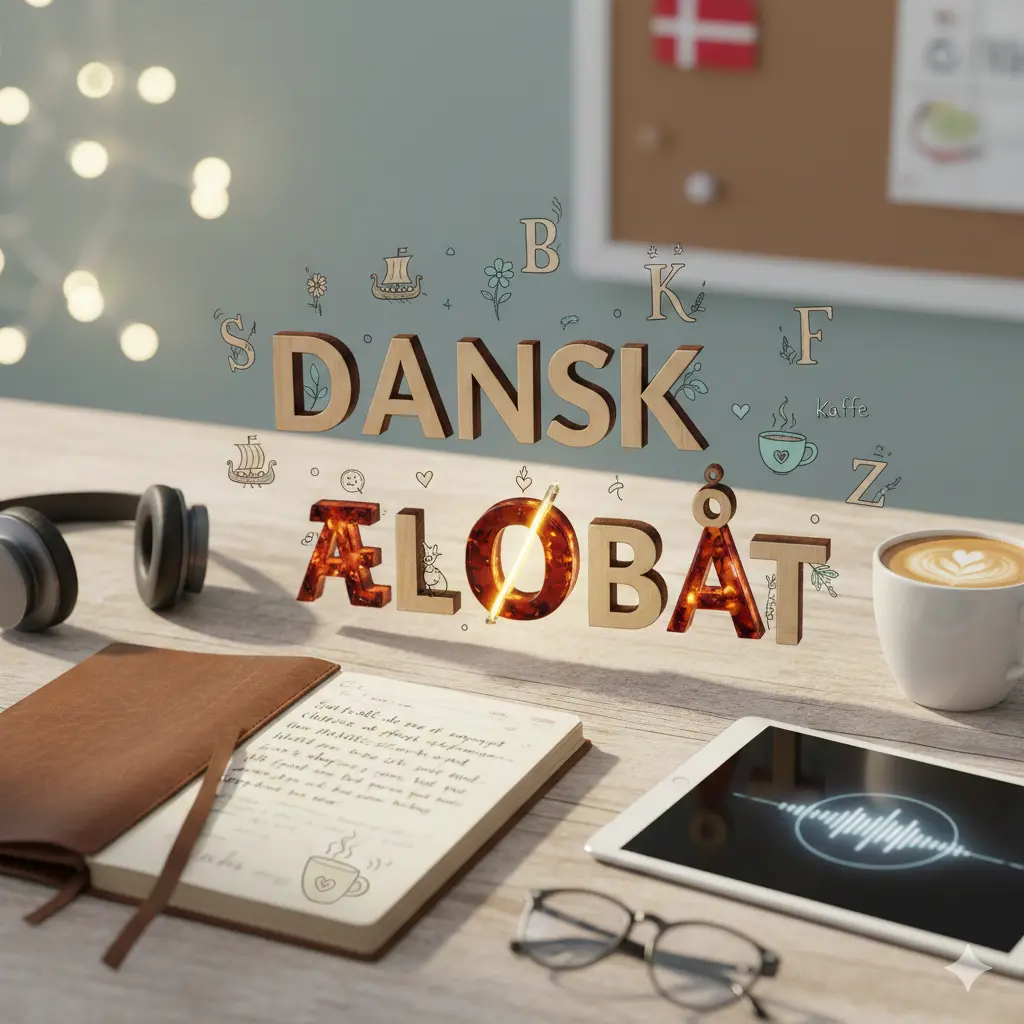
In danish alphabet there are 29 letters. As we have 26 letters in english but there are extra 3 letters which make the danish extra hard to pronounce. These letters are æ, ø and å. These letters comes in the middle of the words or at the begining or at ending of the words, which make the pronounciation very different than english.
The letter æ sounds like the a" in the English word "hat." You will hear it in words like lærer, which means teacher. The vowel ø does not exist in English. It is often compared to the vowel sound in "burn." Words like brød, which means bread and københavn which's Copenhagen depend on this sound. The letter å sounds close to the "o" in "more". Appears in words like år, which means year.Pronunciation can be tough for learners. One unique feature is the d, also known as blødt d. Even though it is written as a "d " it does not sound like a hard consonant. Instead it sounds like a soft "th" made with minimal tongue movement. For example the word mad which means food ends with a almost disappearing sound rather than a clear "d.”
Another well-known feature is stød sometimes described as a glottal stop or vocal tightening. It can change the meaning of words that otherwise look the same. While stød is important beginners should not worry about mastering it away. Many regional dialects use it differently. Context usually makes meaning clear.
Danish also has a lot of vowel sounds compared to English. Small differences in mouth shape and length can create new sounds. A good strategy is to focus on listening before speaking. Spend time hearing Danish audio repeating slowly and accepting that pronunciation gets better over time.
Practice Tip: Listening is more important than being perfect at the start. Use clear audio examples in our Interactive Practice Hub to build confidence step by step.
First 100 Essential Danish Words and Phrases
Building a base in Danish starts with everyday words you will actually use. Simple greetings come first. Hej works in any situation and is used both formally and informally. Godmorgen, which means morning, Godaften, which means good evening and Tak, which means thank you appear often in daily interactions.Introducing yourself is easy. Jeg hedder… means "My name is…" and Hvad hedder du? means "What is your name?" These phrases are polite, neutral and suitable in situations. Danes generally like simple communication so there is no need for overly formal phrasing.
When you are learning Danish, the way they say numbers can get really complicated.. At first you should just focus on the basics like one to ten. These are the numbers you will use a lot. The Danish numbers are en to, tre, fire, fem. You should also learn the days of the week like mandag, which's Monday and tirsdag which is Tuesday. This will help you make appointments and understand signs that say mandag or tirsdag. Learning days of the week, like mandag and tirsdag is very helpful.
Practical questions can make daily life much easier. Phrases like Hvor er…? which means "Where is…?" Hvad koster det? which means "How much does it cost?" and Taler du engelsk? which means "Do you speak English?" are extremely useful for travelers and new residents.
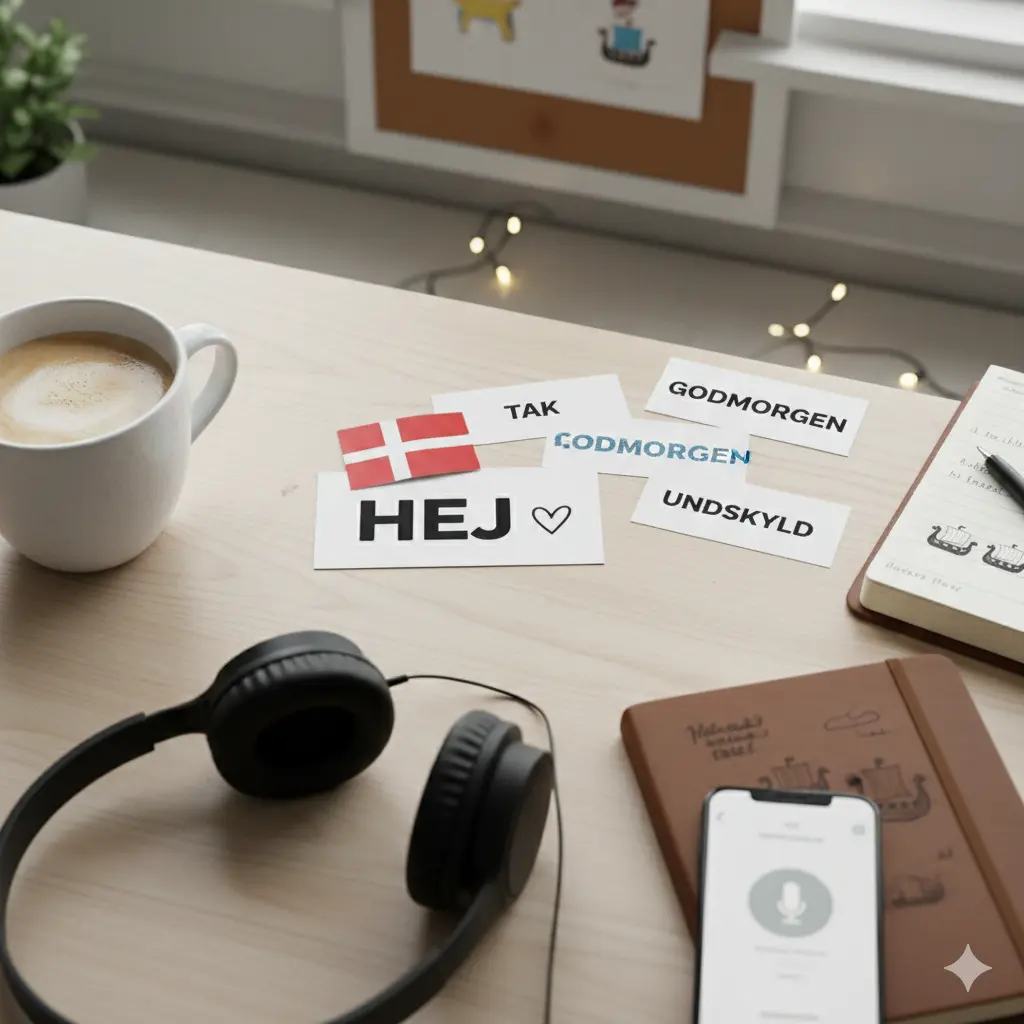
Danish greetings like Hej and Tak
Understanding Basic Danish Grammar Structure
Danish grammar is often simpler than learners expect. Sentence structure usually follows the subject–verb–object pattern, to English. For example Jeg spiser brød means "I eat bread.”
One important rule is verb placement. When a sentence begins with a time word or adverb the verb must come before the subject. For example I dag går jeg hjem means "Today I go home." This rule appears often in written and spoken Danish. Early exposure is helpful.
Nouns are either common or neuter. There are no rules for gender but about three quarters of Danish nouns are common gender. Over time gender becomes intuitive through exposure and repetition.
Verbs in the tense are relatively easy. Most verbs simply add -r. For example at arbejde, which means to work becomes jeg arbejder, which means I work. This consistency makes basic sentence building less intimidating.
Writing Tip: Focus on short sentences first. Practice examples using our Writing Trainer Tool.
Setting Up Your Danish Learning Plan
Consistency is really key when it comes to learning Danish. To make progress you do not need to study for hours. 15 To 30 minutes a day is enough. Short daily sessions help your brain pick up how to pronounce things and learn words easily. A good study plan should have a bit of everything: listening, reading, speaking and a little writing. One cool way to see how you are improving is to record yourself speaking Danish. Then compare the recordings you made a days or weeks ago. You will notice that you are getting better. Learning with others can also help keep you motivated. You can join groups for language learners find a study buddy or use apps, like Tandem and HelloTalk. These tools help you stay on track because you know others are also learning. They can even be your language exchange partners. You help them with their language. They help you with yours.
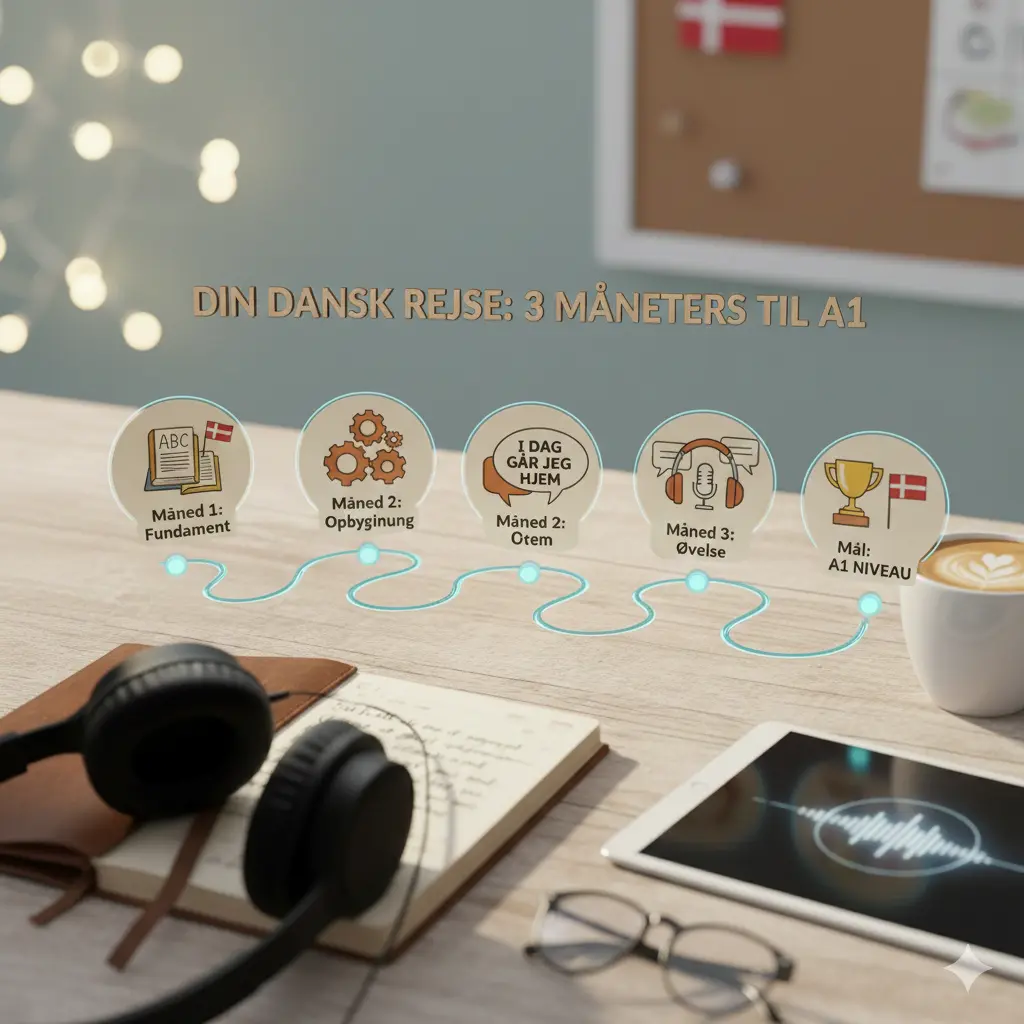
Beginner Danish learning roadmap
Best Resources for Learning Danish as a Beginner
Apps and Digital Tools
Apps work best as supplements than replacements for real exposure. Duolingo and Babbel help reinforce vocabulary while Forvo is excellent for hearing how real Danes pronounce words.
Textbooks and Workbooks
Teach Yourself Danish offers dialogues while Danish: An Essential Grammar explains structure clearly without overwhelming beginners.
Media and Immersion
Children’s programs like Bamse og Kylling and news from DR Ultra Nyt use language and clear pronunciation making them ideal for learners.
Cultural Context: Learning Danish Through Culture
communication reflects cultural values. Concepts like Hygge emphasize comfort and simplicity while Janteloven encourages humility and equality. These ideas shape how Danes speak and interact.
Most modern Danish communication uses the du rather than the formal De. Understanding this shift helps learners sound natural and avoid unnecessary formality.

Danish hygge setting
Celebrations, like Jul, which means Christmas and Sankt Hans which means Midsummer introduce seasonal vocabulary and traditions that deepen both language understanding and cultural connection.